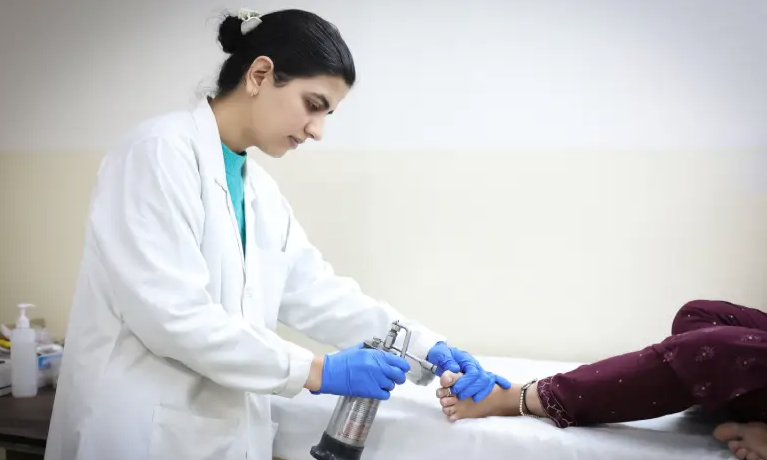
Acne, eczema, hair fall, pigmentation, and fungal infections are among the most common reasons people see a doctor. They need to be treated, and it's a dermatologist. The only postgraduate qualification that gets you there is MD Dermatology. It is offered by Mahatma Gandhi University of Medical Sciences & Technology (MGUMST), Jaipur, in MD Dermatology, Venereology, and Leprosy. This guide details the dermatologist requirements, course information, salary outlook, and career trajectory.
What Is MD Dermatology?
MD Dermatology is a 3-year postgraduate medical degree course. It teaches doctors how to diagnose and treat skin, hair, nail, and mucous membrane problems.
The specialties in India are officially known as dermatology, venereology, and leprosy. STIs are part of venereology. In certain areas of the country, leprosy is still a public health threat and therefore is retained in the curriculum. The training consists of clinical postings, minor procedures, a lab, and a research thesis/exams.
What Are the Eligibility Criteria for an MD Dermatology Course?
When you're looking into dermatologist qualifications, it's important to understand the following:
- A graduate of MBBS from a recognized institute by the National Medical Commission (NMC).
- One-year compulsory rotating internship.
- Registration with NMC or State Medical Council as permanent or provisional.
- National Entrance Eligibility cum Allotment Test (NEET-PG) score.
Admission will be based on counselling on NEET-PG rank. These cut-offs, rules, and documents are subject to change from year to year. Please read the latest MGUMST prospectus and admission notification and call the admission helpline before submitting the application.
How Can I Become a Dermatologist After MBBS?
If you are unsure about how to get into skin medicine, the way is very straightforward:
- Finish MBBS: The study lasts 4½ years and concludes with a one-year internship.
- Become a registered member of the Medical Council: It is not possible to practice or enroll for PG without.
- Prepare for NEET-PG: Amend the complete syllabus of MBBS. A high overall mark is most important as dermatology questions take up a small part of the paper.
- Take part in counselling: The seat you get depends on your rank, type, and seat availability. Put the dermatology positions in your desired order.
- Finish the 3-year MD: Be prepared for clinical work, theses, and university examinations.
- Begin to get into a career or specialize further: You can join a hospital, establish a clinic, or specialize in a particular field.
Other routes exist. There is a recognized DNB in dermatology, and a two-year diploma (DDVL) also exists. The MD continues to be the choice of the majority, due to its academic and teaching importance.
Dermatologist Course Details: What Will You Study at MGUMST?
The university lists as follows for this programme:
2024 - 25
| Detail |
Information |
| Course |
MD Dermatology, Venereology, and Leprosy |
| Duration |
3 Years |
| Campus |
Sitapura, Tonk Road, Jaipur |
The following is a typical dermatology MD programme:
- Basic sciences: skin anatomy, physiology, pathology, microbiology, and pharmacology as they apply to the skin.
- Clinical dermatology: inflammatory, infectious, autoimmune, allergic, and pigmentary disorders.
- Procedures: Biopsies, electrosurgery, chemical peels, introduction to lasers and cosmetic procedures, and cryotherapy.
- Venereology and leprosy: diagnosis, treatment, and public health aspects.
- Research: Dissertation, case presentations & journal clubs.
MGUMST is UGC recognised and NAAC accredited with an A+ grade. It was founded in the year 2011 and is stated on its website that it is the first private medical university of Rajasthan. It provides clinical exposure to its postgraduate students at its teaching hospital, Mahatma Gandhi Hospital, in Jaipur. Please refer to the official documents of the university for confirmation of the syllabus and training outline.
How Long Does an MD Dermatology Course Take?
A three-year MD course is offered. Counting the complete walk:
MBBS: 4.5 years
Internship: 1 year
MD Dermatology: 3 years
This equals nearly 8 and a half years from Class 12 + NEET-PG preparation. A fellowship program in dermatosurgery, cosmetology, or trichology is offered by some doctors and lasts for an additional year or less.
MD Dermatology Salary: What Can You Expect?
The compensation is not consistent in dermatology and is influenced by:
- The setting: government posts are on a fixed pay scale. Competitive salaries are offered by corporate hospitals. Your patient flow is the lifeline of private clinics.
- Tier 2 and Tier 3 cities have relatively lower numbers of dermatologists and build a patient base faster; however, metro cities offer better compensation.
- Doctors who provide procedures such as laser, hair, and advanced aesthetic services typically make more than doctors who provide only medical dermatology services.
- Reputation builds with the years, and so does the income.
Residents receive a monthly allowance during the MD, which varies from institution to institution. To find out current pay, look at job postings, government pay announcements, and updates related to the NMC. Statistical information has a limited shelf-life, so take any single statistic with a pinch of salt.
What Career Opportunities Are Available After MD Dermatology?
A degree in dermatology can lead to a wide variety of career paths:
- Government hospitals and medical colleges: clinical posts and faculty posts, which can get to assistant professor and above.
- Consultants: Multi-specialty chains in corporate or private hospitals.
- Private clinic: your own practice (after a couple of years), which many dermatologists opt for after their experience.
- Cosmetic dermatology, aesthetic dermatology: lasers, fillers, skin rejuvenation, and hair restoration.
- Dermatosurgery and Trichology: specialized work with the surgery of skin disorders or hair disorders.
- Teaching & research: academic careers, clinical trials, and publications.
- Medical advisor, clinical research, and product development for pharmaceutical and skin care companies.
What is Dermatology in India?
It's a good one, and it's getting even better. Here are a few reasons:
- Disease burden: Acne, fungal infections, eczema, and psoriasis occur in individuals of all ages, and pollution/lifestyle changes contribute to the burden.
- Increased awareness: Skin and hair issues are not only cosmetic concerns but also medical issues as well.
- Aesthetic demand: interest is increasing for skin treatments, particularly in cities.
- Unequal distribution: Dermatologists tend to be clustered in large cities, and smaller towns require further dermatologists.
Specifically, there is a need for qualified faculty members in dermatology in the new medical colleges.
It takes patience and skill to be successful in the field. Follow-up visits are made, and the practice is established by word of mouth over time.
Is MD Dermatology Right for You?
Ask yourself a few honest questions. Do you enjoy visual diagnosis? Can you be patient with long-term conditions? Are you comfortable doing small procedures with your hands? If you answered yes, dermatology may suit you well. It offers a good mix of medicine, procedures, and long-term patient relationships, and it usually has more predictable working hours than many other specialties.
Final Thoughts
To become a skin specialist, you need an MBBS, an internship, medical council registration, a good NEET-PG rank, and three years of focused postgraduate training. The reward is a career with high demand, varied options, and long-term patient trust.
If you plan to study MD Dermatology, MGUMST in Jaipur is worth a close look. Visit the MGUMST website, read the latest prospectus and admission notifications, and speak to the admission team before you decide.