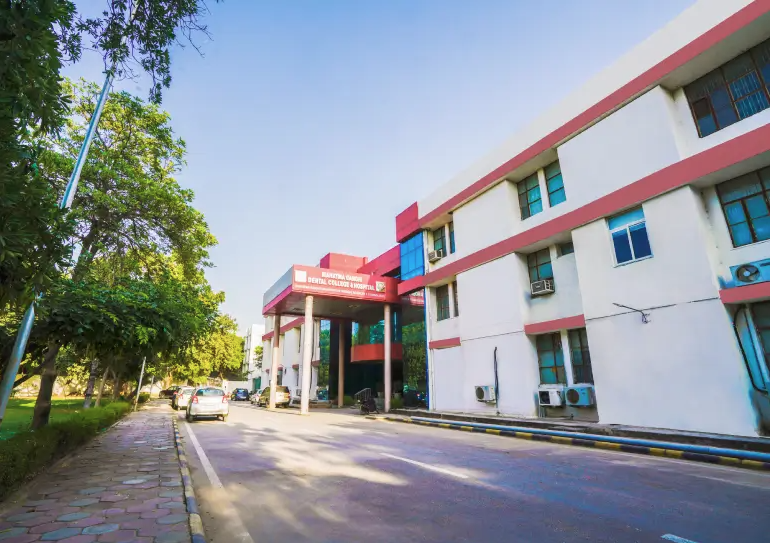
The most crucial decision that a NEET aspirant will ever make is choosing one of the best medical colleges in India, and at Mahatma Gandhi University of Medical Sciences & Technology, Jaipur, students are seen each year who make this decision because there is always a lack of guidance regarding what should be taken care of. There is no information about the labs, faculty, or real hands-on time with patients from a hospital's name. In this guide, you will find the details regarding how to distinguish what is quality from what is marketing.
Why This Decision Deserves More Than a Google Search
Your clinical exposure, your research, and sometimes even your first job are determined by your medical college. Two colleges can award the same MBBS degree while providing very different levels of clinical exposure, mentorship, and practical training. This is why the question of which is the best medical college in India cannot have a single answer, as it would depend on what you prefer—research, hospital training, cost of college, or further studies.
Factors to Consider Before Choosing a Medical University
Before shortlisting, look through the following checkpoints for each college:
Accreditation and recognition: Check the institution’s regulatory recognition and accreditation status. MGUMST currently holds an A+ NAAC accreditation, valid from November 8, 2024, to November 7, 2029.
Attached hospital and bed strength: A medical university with hospital training built into the daily coursework produces far more confident doctors than one that depends on tie-ups with distant hospitals.
The faculty experience: A medical school that has experienced faculty provides better mentorship during rounds, not only with their lecture slides.
Infrastructure: Simulation labs, robotic surgery training, modern diagnostic equipment, etc. are more relevant after the first year.
If you are thinking about academic medicine, see research culture, namely for active publications, collaborations, and dedicated research centers.
Clarity about the admission pathway—a clear NEET UG-based admission and the information on the seat matrix—will be transparent.
Which Is the Best Medical University in India?
No single 'best' (different rankings on different bases, including NIRF score, research output, hospital bed capacity, faculty ratio, etc.). Don't focus on a rank number; compare universities on the above factors and on your priorities. Consider whether your priorities are better aligned with a government or private institution, taking into account factors such as fees, infrastructure, clinical exposure, location, and available programmes.
Top Medical Colleges in India: What Actually Sets Them Apart?
If you observe any list of top medical colleges in the country, you will not find any such factors as age or size. Look at indicators such as clinical exposure, teaching hospital capacity, faculty strength, research opportunities, and access to modern medical technology. For example, a university that was one of the first places in its area to train students to perform surgery with robots has a leg up on another university that is still performing textbook demonstrations.
Best MBBS Colleges in India: What to Look For
If your priority is to attend a college for an MBBS degree, then look for colleges that
- A well-equipped multi-specialty hospital within or close to the campus.
- A high ratio of lecturers to students in the classroom (not necessarily lecture halls filled)
- Clear NEET UG-based admission, and the information on the seat matrix will be transparent.
- Real complex cases—such as organ transplants, specialist surgical programs, or telemedicine programs—are good signs of a hospital that has actual clinical results to show.
Best Medical University for Postgraduate Courses
A different set of priorities should be considered by postgraduate students. Check the number of DM/MCh seats and disciplines, the presence of super-specialty courses, and if the university actively promotes thesis research. A university that provides lots of PG and super specialty seats in dozens of streams provides a lot of options for PG aspirants to specialize without the need to move.
Best Private Medical Colleges in India
Mahatma Gandhi Medical College & Hospital, the university's flagship teaching hospital, has received JCI accreditation, alongside national healthcare quality accreditations and certifications. If you are looking for the top private medical colleges in India, look for ones that have international healthcare accreditation, the patient-care experience of the affiliated hospital, and a history of medicine in the region (as these are all strong indicators of real investment in patient care and student training).
How to Select a Medical College After NEET
After receiving your NEET result, you have to limit your choices in this sequence:
1. Use realistic rank and category quota to filter.
2. Shortlist universities that have been accredited and are hospital-trained.
3. Attend campus visits and/or virtual visits if available.
4. Review placements and internships of the past batches.
5. Verify fee structure and scholarship eligibility prior to locking your choice.
Medical University With Modern Infrastructure and Research Opportunities
The campus occupies several acres, featuring national and international relationships, advanced laboratories, and simulation centers; it tells you the institution goes beyond the classroom. Research opportunities, either through PhD programmes or as collaborative research, also show that a university is not only training students in clinical practice but also in research.
What Makes MGUMST Worth Your Attention?
These are some of the factors that make Mahatma Gandhi University of Medical Sciences & Technology (MGUMST), Jaipur, a notable private medical university in Rajasthan. Established in 2011, the university has 45+ acres of infrastructure and holds an A+ NAAC accreditation valid from November 8, 2024, to November 7, 2029. Its flagship teaching hospital, Mahatma Gandhi Medical College & Hospital, is a 1,450-bed tertiary care center.
MGUMST also reports 40+ national and international collaborations and describes itself as one of the earliest institutions in the region to offer hands-on training in robotic-assisted surgeries. The hospital has reported more than 175 liver transplants and 2,650 kidney transplants. The university offers a broad range of undergraduate, postgraduate, and super-speciality programmes, along with programmes in dentistry, nursing, physiotherapy, occupational therapy, hospital administration, health informatics, and allied health sciences.
Final Thoughts
The selection of the best medical college in India depends on the alignment of the institution's medical college strengths (hospital training, faculty size, research culture, and infrastructure) to your medical college academic objectives.
Those are the basics we built our university upon at Mahatma Gandhi University of Medical Sciences & Technology, Jaipur, and students don't just receive a degree at MGUMST; they get real clinical readiness. Be sure to think things through, as this will have an impact on your entire medical career.